
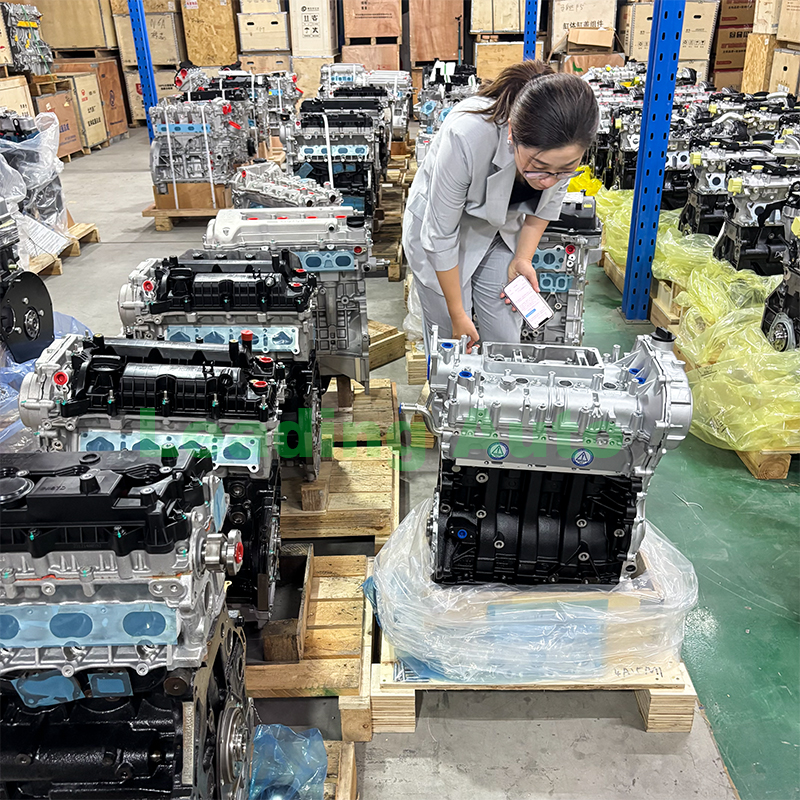
In engine repair and engine parts sourcing, buyers often hear two common terms: Long Motor and Short Motor.
Many customers simply say, “I need an engine.”
But for a professional engine parts supplier, the word “engine” is not specific enough.
Does the customer need a complete engine, a long motor, a short motor, a cylinder head, a cylinder block, a crankshaft, or other engine repair parts?
If this is not confirmed clearly at the beginning, it may lead to inaccurate quotations, wrong configurations, installation problems, or after-sales disputes.
For engine parts importers, wholesalers, distributors, repair shops, and professional buyers, understanding the difference between a long motor and a short motor can help you choose the right purchasing solution, reduce repair costs, and lower sourcing risks.
1. What Is a Short Motor?
A Short Motor usually refers to the lower part of the engine assembly. It can be understood as the basic power core of the engine.
Different countries and suppliers may define the configuration slightly differently, but in most cases, a short motor usually includes:
- Cylinder block
- Crankshaft
- Pistons
- Piston rings
- Connecting rods
- Main bearings
- Connecting rod bearings
Oil pan, depending on supplier configuration
Oil pump, depending on supplier configuration
In simple terms, the core of a short motor is:
Cylinder Block + Crankshaft + Piston & Connecting Rod System
A short motor usually does not include the cylinder head, camshaft, valves, timing system, intake and exhaust system, turbocharger, fuel injection system, electrical parts, or external accessories.
This means that if a customer buys a short motor, the original cylinder head, valve train, manifolds, water pump, oil pump, sensors, wiring harness, and other external parts may need to be reused from the old engine, if they are still in good condition.
2. What Is a Long Motor?
A Long Motor is usually based on a short motor, but with the cylinder head assembly and some upper engine components added. It is closer to a complete engine core assembly.
In most cases, a long motor may include:
- Cylinder block
- Crankshaft
- Pistons
- Connecting rods
- Cylinder head
- Camshaft
- Valves
- Valve springs
- Rocker arms or lifters, depending on engine structure
- Timing chain or timing belt, depending on supplier configuration
- Cylinder head gasket
Oil pan, depending on supplier configuration
Front cover or valve cover, depending on supplier configuration
In simple terms, the core of a long motor is:
Short Motor + Cylinder Head Assembly
However, it is important to understand that a long motor is not the same as a complete engine.
- A long motor does not always include:
- Alternator
- Starter
- A/C compressor
- Turbocharger
- Intake manifold
- Exhaust manifold
- Injectors
- Fuel pump
- Throttle body
- Wiring harness
- ECU
- Flywheel or clutch
- Other external accessories
Different suppliers may have different definitions of a long motor. Therefore, buyers should always confirm the detailed configuration list before placing an order.
Do not judge only by the product name “Long Motor.”
3. Main Differences Between Long Motor and Short Motor
The main difference between a long motor and a short motor is not only the name. The real difference is the assembly scope, repair application, purchasing cost, installation workload, and after-sales risk.
| Item | Short Motor | Long Motor |
| Main Structure | Cylinder block, crankshaft, pistons, connecting rods | Short motor + cylinder head assembly |
| Cylinder Head Included | Usually no | Usually yes |
| Valve Train Included | Usually no | Usually partially or fully included |
| Cost | Lower | Higher |
| Installation Workload | Higher, more old parts need to be reused | Lower, core assembly is more complete |
| Requirement for Repair Skill | Higher | Relatively lower |
| Suitable Situation | Lower engine damage, upper parts still usable | More serious engine damage or need for a more stable solution |
| Main Risk | Old cylinder head or accessories may affect final performance | Higher cost and configuration must be confirmed clearly |
For importers and wholesalers, neither a short motor nor a long motor is always better.
The right choice depends on the repair condition, local labor cost, repair ability, old engine condition, and market price acceptance.
4. When Should You Choose a Short Motor?
If the main engine damage is concentrated in the lower part of the engine, a short motor may be a more suitable solution.
For example:
- Cracked or heavily worn cylinder block
- Damaged crankshaft
- Bent connecting rod
- Piston damage
- Cylinder liner wear
- Engine seizure
- Severe lower engine damage caused by lubrication failure
- Original cylinder head is still in good condition
In these cases, if the buyer has strong repair ability and the local labor cost is not too high, buying a short motor can help reduce the overall repair cost.
A short motor is suitable for:
- Professional repair shops
- Engine rebuilders
- Technical wholesale buyers
- Price-sensitive markets
Customers who can reuse old engine accessories
However, a short motor also has a clear risk.
If the original cylinder head, valve train, timing system, or external accessories already have hidden problems, the engine may still have noise, oil leakage, overheating, low power, oil burning, or other issues after installation.
Therefore, before choosing a short motor, the condition of the old upper engine parts and external accessories must be checked carefully.
5. When Should You Choose a Long Motor?
If the engine damage is more serious, or if the customer wants to reduce installation and repair risks, a long motor is usually a more stable choice.
A long motor is recommended in the following situations:
- Both cylinder block and cylinder head are damaged
- Cylinder head deformation caused by overheating
- Valves, camshaft, or internal cylinder head parts are badly worn
- Old engine repair history is unclear
- Customer wants to reduce old parts reuse
- Local labor cost is high
- Repair shop wants to shorten installation time
- Wholesaler wants to reduce after-sales risk
- Customer needs a more complete and stable engine core assembly
The advantage of a long motor is that the core components are more complete and better matched. During installation, fewer old parts need to be transferred from the original engine.
For end users and repair shops, a long motor can often reduce uncertainty during installation.
Of course, the cost of a long motor is usually higher than that of a short motor. But in many markets, the higher purchasing cost may bring lower installation risk and lower after-sales risk.
6. What Information Should Buyers Provide Before Quotation?
To avoid wrong models and configuration disputes, buyers should provide the following information before requesting a quotation:
- Engine Code
- OEM number or original part number
- Vehicle brand and model
- VIN number is also acceptable to check all the details
These details help the supplier confirm the correct engine version, product configuration, application, and quotation.
For engine products, small differences may lead to big problems. Even for the same vehicle brand and engine displacement, different production years, market versions, and engine codes may have different mounting positions, sensors, intake and exhaust structures, or timing system designs.
A professional engine parts supplier should help buyers confirm these details before quotation, instead of quoting only based on a general product name.
7. How Nanjing Leading Auto Technology Helps Customers Choose the Right Solution
Nanjing Leading Auto Technology focuses on engine system parts and provides one-stop engine parts sourcing support for global importers, wholesalers, distributors, repair shops, and professional buyers.
Our main products include:
- Long Motor
- Short Motor
- Cylinder Head
- Cylinder Block
- Crankshaft
- Camshaft
- Turbocharger
- Timing Kit
- Engine Repair Parts
When customers inquire about a long motor or short motor, we do not quote only based on a simple product name.
We help customers confirm the engine code, OEM number, vehicle application, VIN information if available, product configuration, quality level, and actual repair situation. Based on these details, we help customers judge whether a short motor or a long motor is more suitable.
Our goal is not to make customers buy the more expensive option.
Our goal is to help customers buy the right product, reduce installation risk, and reduce after-sales problems.
Conclusion: Long Motor or Short Motor — The Key Is Buying the Right One
Choosing between a long motor and a short motor is essentially choosing the right repair and purchasing solution.
If the lower engine part is damaged, while the cylinder head and external accessories are still in good condition, a short motor may be more economical.
If the engine is seriously worn, the cylinder head is damaged, the repair history is unclear, or the customer wants to reduce installation and after-sales risks, a long motor is usually a safer choice.
For professional buyers, the decision should not be based only on price. Buyers should also consider product configuration, old engine condition, installation ability, local labor cost, and after-sales risk.
Nanjing Leading Auto Technology will continue to focus on engine system parts and provide global customers with accurate, efficient, and reliable engine parts sourcing solutions.
About Nanjing Leading Auto Technology
Nanjing Leading Auto Technology is a China-based engine parts supplier providing one-stop procurement solutions for global engine parts importers, wholesalers, distributors, repair shops, and professional buyers.
Our main products include long motors, short motors, cylinder heads, cylinder blocks, crankshafts, camshafts, turbochargers, timing kits, and other engine repair parts.
We help customers confirm engine codes, OEM numbers, vehicle applications, VIN information, product configurations, quality levels, and mixed engine parts orders, making engine parts sourcing from China more accurate and reliable.