
Bare Engine vs Long Block vs Short Block: A B2B Buyer’s Sourcing Guide
For engine distributors, wholesalers and professional rebuilders, the terms bare engine, long block and short block are often used differently by different suppliers.
That creates a simple but expensive sourcing problem:
Two suppliers may quote the same engine code while supplying very different assemblies.
Before comparing prices, B2B buyers should first confirm exactly which components are included.
Quick Answer
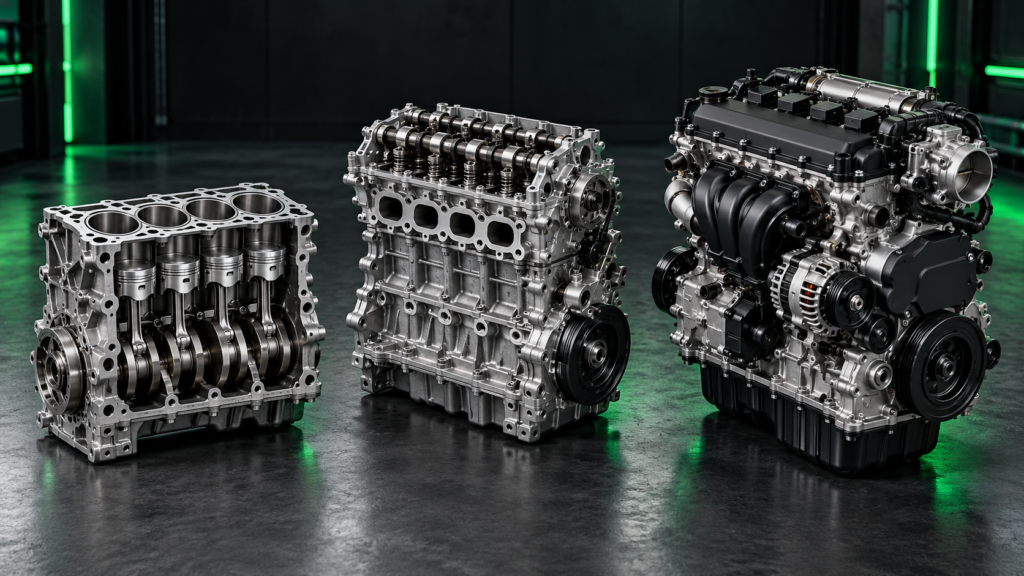
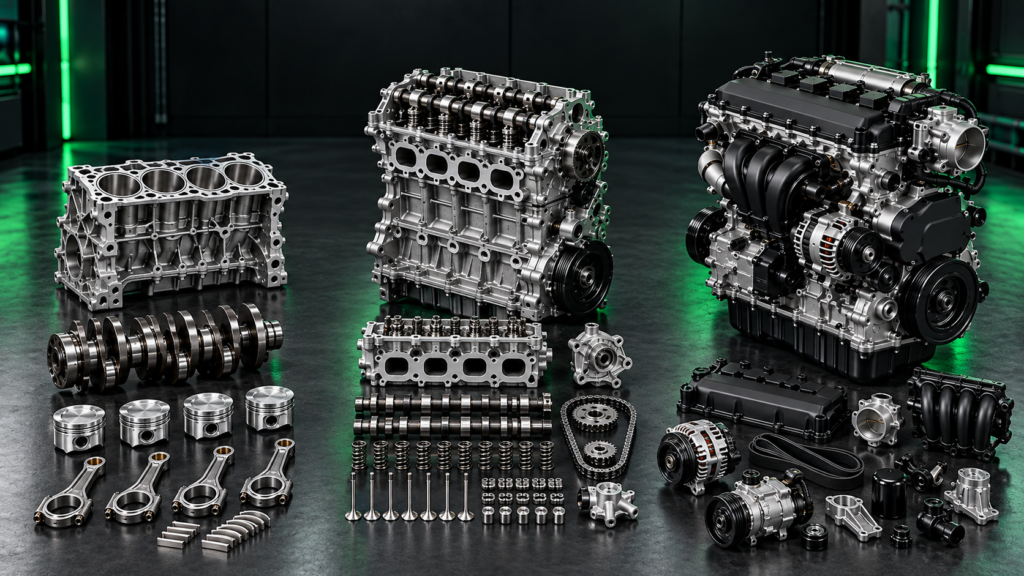
A short block normally includes the main lower-engine components such as the cylinder block, crankshaft, pistons and connecting rods.
A long block generally adds the cylinder head and valve-train components to the short block.
A bare engine may refer to a more complete engine assembly, but the exact configuration varies significantly by supplier and market.
For this reason, buyers should never rely on the product name alone.
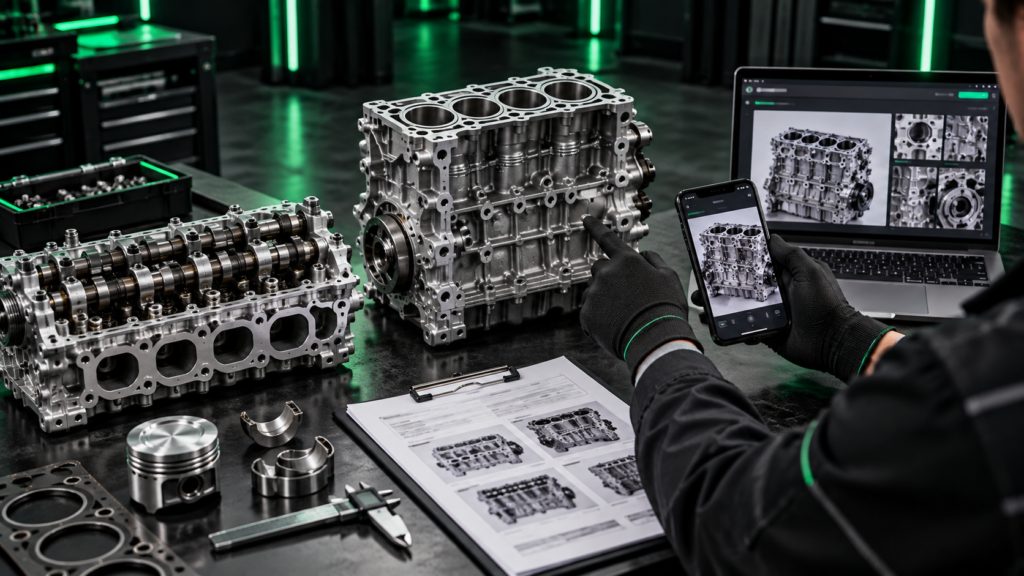
The safest approach is to confirm the engine code, OE reference, included components and product photos before quotation and shipment.
What Is a Short Block Engine?
A short block mainly covers the lower section of the engine.
Depending on the confirmed specification, it may include the:
- Cylinder block
- Crankshaft
- Pistons
- Connecting rods
- Main bearings and related internal components
The cylinder head and most upper-engine components are normally not included.
Short blocks are commonly selected by engine rebuilders that already have usable cylinder heads or other external components.
For B2B buyers, the main advantage is that the assembly is simpler and may reduce unnecessary replacement of reusable parts.
However, compatibility still needs to be verified carefully.
Differences in crankshaft specification, piston design, oil passages or mounting points may affect installation.
What Is a Long Block Engine?
A long block is generally more complete than a short block.
In addition to the lower-engine assembly, it commonly includes the cylinder head and major valve-train components.
Depending on the engine application and supplier specification, a long block may include:
cylinder block, crankshaft, pistons, connecting rods, cylinder head, camshaft and valve-train components.
However, external accessories such as the alternator, starter motor, intake manifold, exhaust manifold or turbocharger may not be included.
This is why the phrase “long block” alone is not enough for an international purchase order.
Buyers should request a detailed component list and actual product photos before confirming the order.
What Does “Bare Engine” Mean?
“Bare engine” is widely used in the aftermarket, but its meaning is less standardized.
In some markets, a bare engine may be similar to a long block.
In other cases, it may include additional items such as:
timing components, valve cover, oil pan or selected external engine parts.
This variation is one of the main reasons why buyers should not compare bare-engine quotations based only on price.
A lower quotation may simply contain fewer components.
For international B2B sourcing, the product configuration should therefore be defined by the actual included parts, rather than only the words “bare engine.”
Bare Engine vs Long Block vs Short Block
| Item | Short Block | Long Block | Bare Engine |
|---|---|---|---|
| Cylinder Block | Usually included | Usually included | Usually included |
| Crankshaft | Usually included | Usually included | Usually included |
| Pistons & Connecting Rods | Usually included | Usually included | Usually included |
| Cylinder Head | Normally not included | Usually included | Depends on configuration |
| Camshaft / Valve Train | Normally not included | Usually included | Depends on configuration |
| Timing Components | Depends on supplier | Depends on supplier | Often configuration-dependent |
| Oil Pan / Covers | Varies | Varies | Varies significantly |
| External Accessories | Normally excluded | Normally excluded | Usually confirmed separately |
Important: the exact configuration should always be confirmed with the supplier before ordering.
Which Engine Assembly Should a B2B Buyer Choose?
The correct choice depends on what your customer or repair network already has available.
A short block may be suitable when the existing cylinder head and upper-engine components can still be reused.
A long block may be more practical when both the lower engine and cylinder head require replacement.
A bare engine can reduce assembly work when a more complete replacement is required, but buyers must confirm exactly what is included.
For distributors, another consideration is inventory.
A more complete engine may be easier to sell as a replacement solution, while individual short blocks or long blocks may serve more specialized rebuilding customers.
Why Engine Code Alone Is Not Enough
Engine code is one of the most important sourcing references, but it is not always sufficient by itself.
The same engine family may have differences in:
vehicle application, model year, sensors, oil pan design, cylinder head configuration, intake or exhaust layout and accessory mounting points.
This is especially important when sourcing engines for multiple countries.
A specification commonly used in one market may not match the version used in another.
For this reason, professional sourcing normally requires a combination of:
Engine code + OE reference + vehicle application + model year + original engine photos
This significantly reduces the risk of incorrect configuration.
What Should Buyers Confirm Before Ordering?
Before requesting a final quotation, B2B engine buyers should confirm the engine code and vehicle application, clarify whether a short block, long block or bare engine is required, request a detailed list of included components, provide OE numbers where available, send original-engine and mounting-point photos, confirm the required quantity and destination market, and verify packing and inspection requirements before shipment.
The more complete the information is before quotation, the lower the risk of receiving a technically correct engine family but an incorrect assembly configuration.
Why Configuration Verification Matters in International Sourcing
An incorrect engine configuration creates more than a technical problem.
For an importer or distributor, it can create additional costs involving:
international freight, warehouse inventory, workshop labor, customer complaints and warranty handling.
This is why professional engine sourcing should focus on total sourcing risk, not simply unit price.
A slightly cheaper engine may become more expensive if parts need to be changed after arrival.
Why Configuration Verification Matters in International Sourcing
An incorrect engine configuration creates more than a technical problem.
For an importer or distributor, it can create additional costs involving:
international freight, warehouse inventory, workshop labor, customer complaints and warranty handling.
This is why professional engine sourcing should focus on total sourcing risk, not simply unit price.
A slightly cheaper engine may become more expensive if parts need to be changed after arrival.
How Leading Auto Supports B2B Engine Sourcing
Nanjing Leading Auto Technology Co., Ltd. supports overseas distributors, engine rebuilders and wholesalers sourcing engine assemblies and related engine components from China.
Our product range includes:
Bare Engines · Short Blocks · Long Blocks · Cylinder Heads · Cylinder Blocks · Crankshafts · Camshafts · Connecting Rods
Before quotation, we recommend confirming the engine code, vehicle application, OE reference and required assembly configuration.
Product configuration and inspection requirements are then confirmed according to the specific order.
Request a B2B Engine Quote
Looking for a bare engine, long block or short block?
Send us:
Engine Code
OE Number
Vehicle Model & Year
Original Engine Photos
Required Quantity
Destination Market
Our team can review the required configuration before quotation.
Nanjing Leading Auto Technology Co., Ltd.
Engine Parts Manufacturer & Integrated Supplier
Email: admin@leadingautoparts.com
Website: leadingautoparts.com